We live in a world where there seem to be two ways of doing things: my right way or your wrong way. But is our dynamic human nature condemned to just two ways? What about sixty-nine shades of grey? More importantly, how do we decide what’s right or wrong for our collective world when we all have different needs, beliefs, and emotional reactions to the same thing, even in seemingly identical conditions? This is the ugly-headed hydra of social science: humans don’t behave like lab elements. H₂O will be water in all universes, but a man cannot even be the same with his two children. As Heraclitus said, “a man cannot step into the same river twice.” Change is the only constant.
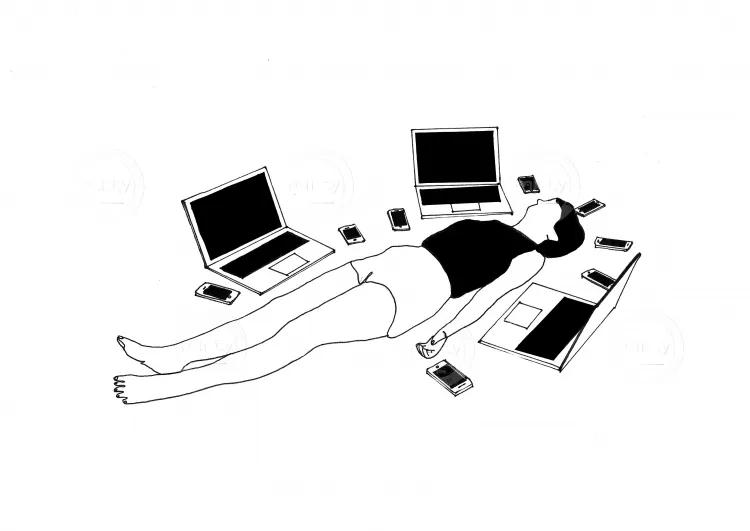
Today, a group of scholars called techno-pessimists believes that social media and the internet have endangered human society and will keep destroying civilization. Take Jonathan Haidt, who argues in The Anxious Generation that smartphones and social media are rewiring childhood and causing a mental health crisis. Or Nicholas Carr, who warned that the internet is making us shallow. The techno-pessimist says: we now live in a trigger generation. Everything triggers us. We spill hate speech online, spread misinformation, live a camera life, and make everything performative. We can no longer eat, sleep, drink, pee, or poop without a camera documenting our lives for strangers. In the buildup, execution, and afterlife of this camera life, we rob ourselves of meaning, peace, serenity, shame, happiness, and privacy.
A strong claim, I might say. But it’s puritanical, not empirical. It loses the plot on the one thing that holds us together: we are humans, and we are different. Peace, happiness, and serenity have no objective metrics. Different faces, different realities, different problems, different solutions. We live on the same earth but come from different worlds. The techno-pessimists follow McLuhan’s assertion that “the medium which extends us, amputates something.” Social media extends brevity and amputates depth. Extends dopamine, anxiety, and stressors, and amputates calmness and antifragility.
Thomas Sowell calls these individuals and their thinking the “vision of the anointed.” Anointed here is not religious. It’s a self-assumed position of people who think they know better and see better than everyone else. They claim to know how Mr. Adamu from Zaria — who pays an annual bill of 6 million and enjoys life with his six wives and innumerable children — should live. As well as Mr. Goodwin, who graduated five years ago with no job and two aged parents to take care of. Goodwin is 35, no girlfriend, no plan for settlement, and an only child. The vision of the anointed believes there is one simple, universal way to living, survival, and happiness.
Let’s interrogate. Is it true that someone who lives a camera-active, always-online life will end up unhappy, shallow, and dispirited? Before we answer, invert the question: is it true that people who are not active on social media, very private, and without a camera life are happy, deep, and highly spirited? The answer to both is no.
First, techno-pessimists evaluate life from the standpoint of right or wrong, more than survival and happiness. Even America’s founding fathers were smarter in the Declaration of Independence (1776): “Life, Liberty and the pursuit of Happiness.” Techno-pessimists believe they are better than others — intellectually superior in diagnosing social problems and drafting better paths for how lives should be lived.
Do people spend so much time on social media for no reason? No. Why do they spend that time? There are two groups: creators and consumers (often the same person). The obvious answer: people spend time on social media to meet entertainment and financial needs. When someone is addicted to entertainment and financial gratification from a medium, it means they are running from something: unhappiness, poverty, loneliness. If people continue to spend time online, it means social media is gratifying their needs. That’s the Uses and Gratification Theory. Social media does not worsen a miserable life; it helps people fill needs.
Techno-pessimists have no particular study to prove their doom theory — only observations that mistake correlation for causation. The Digital Goldilocks Hypothesis posits that moderate use of digital technology is not inherently harmful and may be beneficial. The relationship between screen time and well-being is curvilinear (U-shaped): too little and too much are associated with lower well-being, while a moderate amount is optimal. (What counts as “moderate” is obscure — two hours is already too much for some.)
People attached to a particular behavior do it as a response to something. Those who live a camera life do it for attention. We live in an attention economy; attention snowballs into fame and money. Many have made it through that lifestyle. And those who made it have sometimes relapsed into privacy once the money was made — they hit the peak of diminishing returns.
In our capitalist world — platform capitalism — people tilt toward whatever helps them achieve a better standing on the economic rails. Especially in poor and third-world societies, people have achieved better life and status through screen time by selling ordinary everyday talents that the offline world ignores. Readers of Ayn Rand are familiar with this position.
Rand’s appeal to Silicon Valley entrepreneurs was her commitment to radical individualism: personal prosperity comes from free individuals who apply their talents and accumulate wealth, protected by property rights. In The Fountainhead, the architect-hero John Galt proclaims: “Just as man cannot exist without his body, so no rights can exist without the right to translate one’s rights into reality, to think, to work and keep the results.”
Here’s the real point. Techno-pessimists have misdiagnosed the problem. The real culprit is not social media or the internet. It’s the structure of the capitalist society that gives incentives to behaviors generating socio-economic power. Social media is a tool. What people do with it follows the logic of need. Take away social media, and people will find another way to harvest from the fruition of capitalism. The question isn’t whether we scroll too much. The question is why scrolling is the only ladder so many people have.