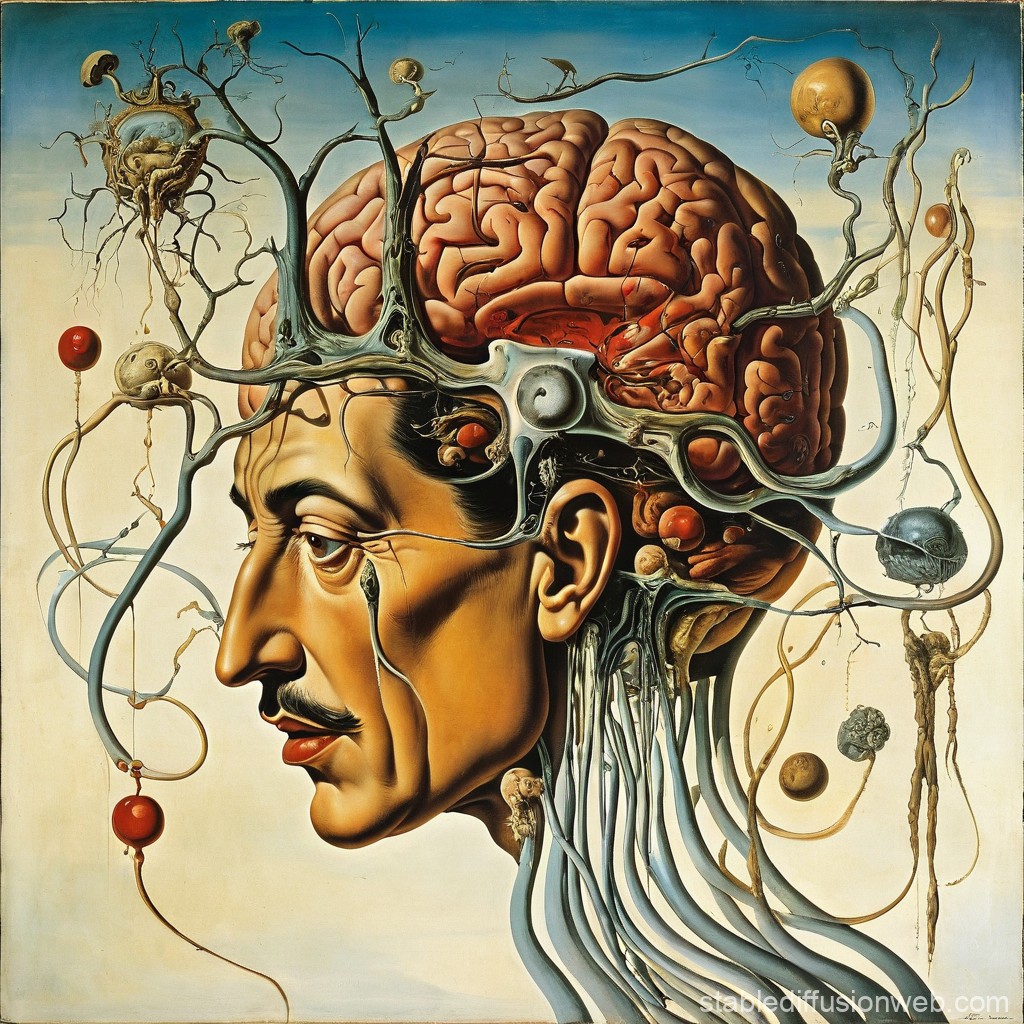
The year 2024 came with many gory and glorious moments for individuals and nations. It was a year ravaged by war, death, violence, division, and the reemergence of Donald J. Trump. However, the year left us with a particular word that piqued our collective consciousness about our activity with the information superhighway technology of our age. According to Oxford, the Word of the Year for 2024 is “brain rot.” The word took over from “rizz,” which was the word of 2023, while “goblin mode” was the word of 2022.
“Brain rot” was chosen to reflect growing concerns about the negative effects of consuming large amounts of low-quality online content, especially on social media. The term’s usage increased by 230% between 2023 and 2024 across various social media platforms such as TikTok and Instagram. According to Oxford University Press (OUP), out of a shortlist of six words, “brain rot” was chosen after over 37,000 public votes, analysis of language data, and widespread discussion. Other words on the shortlist were: demure, dynamic pricing, lore, romantasy, and slop.
It is necessary to note that “brain rot” is not relatively new in the lexicon of words. It was coined 200 years ago by a remarkable writer, poet, activist, and philosopher: Henry David Thoreau. His writing would later profoundly inspire many individuals during his days and afterward inspire Gandhi and help him develop his own theory of truth-force—satyagraha—which focused on winning over the heart and mind of an opponent without ever using violent means.
A transcendentalist, Thoreau wrote beautifully about the environment, as can be seen in his eloquent and lyrical essay titled “A Winter Walk,” but not many people realize perhaps that he was equally passionate about justice and equality, civil disobedience, and abolitionism. He believed that a sense of curiosity and childish wonder were essential to the human experience.
He wrote: “Why level downward to our dullest perception always, and praise that as common sense?” Then he added: “While England endeavors to cure the potato-rot, will not any endeavor to cure the brain-rot, which prevails so much more widely and fatally?”
Brain rot, for Thoreau, was a blight that did not only affect minds. It also eroded the soul and the heart. When we lost our ability for empathy, compassion, understanding, wisdom, and patience and became solely obsessed with power, money, and winning, we were already suffering from brain rot, whether we knew it or not.
While Thoreau projected brain rot chiefly from the angle of weak intellectual standpoint among men of his day, today, the word largely points to the corrosion and erosion of our intellectual strength by our excessive consumption of social media, especially content with little to no intellectual value.
It is worthy of note that every media technology has its negative aspects. As such, in every age, men and women of letters have always found reasons to fault or warn people about the impending danger that may sweep society if caution is not employed. A notable example is Socrates, who was against the technology of books because he believed they would create forgetfulness in the reader’s soul. Little wonder he didn’t write down any of his philosophies.
However, in this age of social media, we are constantly drenched in a pool of information overload where digital content swashes incredibly and splashes us beyond necessity. The toxicity of social media has been captured by many scholars. For example, Jonathan Haidt, in his book “The Anxious Generation,” chronicled facts about teen mental illness, which he attributed to the emergence of “phone-based childhood.” This growing issue begat the Oxford Word of the Year 2024: brain rot.
Yet, it is necessary to point out that while our growing usage of social media is causing brain rot, the truth is that man was not made for the Sabbath; the Sabbath was made for man. That is: Man was not made for social media; social media was made for man. However, the truth is that technology has always been used in a manner antithetical to the inventor’s intention. Gunpowder was used in a manner and direction largely different from its inventor’s idea.
Again, in this age of social media, the inventors cannot be totally expunged from the blame analysis. The rise of social media algorithms with the goal of increasing users’ engagement has made it difficult for many people to pull away from the magnetic force of social media content, which is an extension of human psychological desires and wants—often personal and shrouded in secrecy.
However, as we forge ahead in this 2025 expedition, much work is needed from individuals and social media companies. For individuals, to avoid brain rot, we must decrease our social media time and avoid low-intellectual-quality online content. For social media companies, we cannot tell capitalism to focus less on profit, but to save humanity from brain-rot, they have a role to play; a role they must decide for themselves.